From Four Brands to One Voice: A B2B Brand Unification Story
How a fragmented multi-brand portfolio became a unified, solution-oriented brand — and earned a first-page presence on Google in a highly technical market.
Four companies. One customer. Zero clarity.
After a series of acquisitions, Novanta found itself operating four well-known photonics brands under one corporate roof — each with its own website, messaging, product identity, and customer relationship. For customers integrating components across brands, the experience was fragmented: different sales contacts, inconsistent support, and no unified story about who Novanta was or why it mattered.
The core tension: each of the four brands had earned real equity in the photonics market. Transitioning customers to a new unified brand meant risking that recognition — while staying fragmented meant leaving significant commercial value on the table.
The mandate was clear but complex: unify the brand without losing credibility, reposition from hardware provider to solutions partner, and do it across every customer touchpoint simultaneously — website, product packaging, customer service, pre- and post-sales, and technical support.
Before & After: Four Siloed Brands → One Unified Experience
The four legacy brands — Synrad, Cambridge Technology, Laser Quantum, and Arges — each had their own distinct visual identity, navigation, messaging, and customer experience. The new Novanta Photonics site unified all of them under a single, solution-oriented digital home.

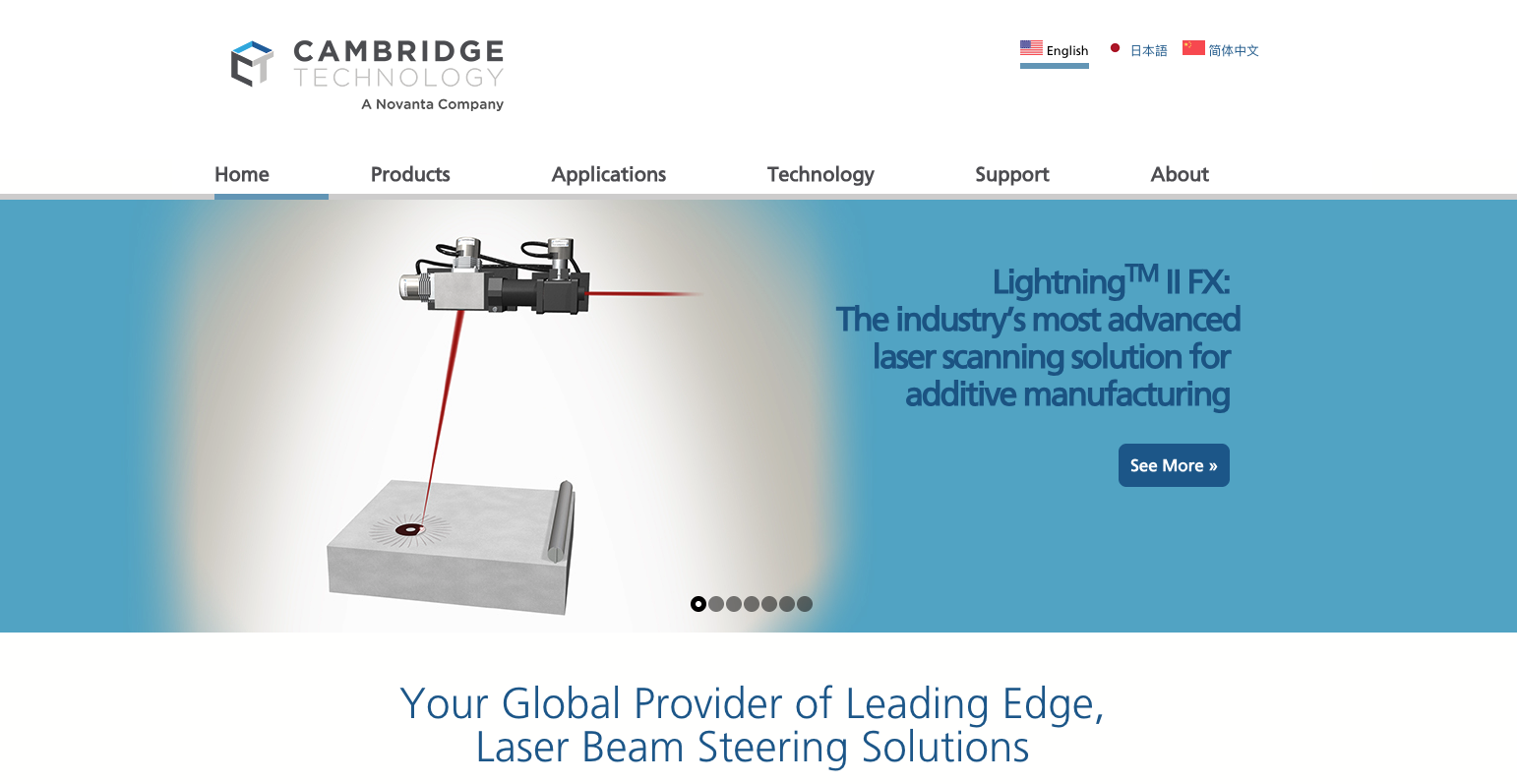


Why this matters: The new site didn’t just look unified — it was architected to eliminate the customer experience of dealing with four vendors. Industries, applications, and capabilities replaced product-catalog navigation, shifting the brand’s positioning from component supplier to integrated solutions partner. This is the foundation that made the content and demand engine work.
A phased strategy built around the customer experience, not the org chart.
Rather than leading with internal restructuring, the strategy started where customers actually lived — and worked backwards from there.
Build a unified voice before touching anything else
Developed new value propositions and a sell message architecture aligned to the new GTM direction — solution-oriented, not product-catalog. This messaging became the source of truth for every piece of content and communication that followed, including battlecards, customer service scripts, and sales enablement materials.
Map every moment a customer met the brand
Identified and prioritized the highest-impact customer touchpoints: website, pre-sales content, customer service scripts, post-sales support, technical documentation, and the product itself. Each was audited against the new brand standard and updated to speak with one voice — not four.
Rebuild the website from the ground up
Designed and launched a consolidated website housing all four legacy brands under one roof — without exposing the internal silos to the customer. Repositioned 20+ product categories and 100+ products by industry and application, removed EOL products to sharpen the narrative, and connected all forms directly to Salesforce and marketing automation to keep the demand engine running from day one.
Unify the brand at the physical product level
Spearheaded a product branding initiative updating hardware I/O plates and unboxing experience to reflect the new unified visual language. Partnered with an external designer to create a cohesive visual brand system for physical products — which was embedded into the company’s 5-stage gate product development process, ensuring every new product launched cohesively from day one.
Build the brand in search, one story at a time
Post-launch, led a content strategy built around ICP pain points and buyer journey mapping. Converted static PDF content into indexed web pages, maintained a consistent blog cadence, and built a content architecture that answered the specific questions photonics buyers were asking at every stage of the funnel. Result: first-page Google rankings and measurable expansion of brand visibility beyond single-component searches.
One brand. Measurable impact.
These results established the brand and demand foundation that enabled the full-funnel engine built in Year 2 — see Case Study 2.
Johanna brings a rare combination of strategic clarity and execution discipline — building integrated demand engines that generated over $100M in pipeline while shaping compelling value propositions for Novanta’s sophisticated engineered solutions. What sets her apart is her ability to operate across the full marketing spectrum — aligning brand, content, product marketing, and demand generation into a single, coherent system that drives measurable outcomes.